Lightning Conductor Protection For Your Property
Understanding the importance of lightning conductor systems in safeguarding your home or business in Lebanon.
Lightning strikes can be devastating, causing significant damage to properties and posing a risk to human life. In Lebanon, where thunderstorms are common, it is essential to have a reliable lightning protection system in place. A crucial component of this system is the lightning conductor, which plays a vital role in directing lightning strikes harmlessly into the ground.
The primary purpose of a lightning conductor is to protect buildings from lightning strikes by providing a safe path for the electrical discharge to follow. This not only prevents damage to the structure but also protects the people inside. Without a properly installed lightning conductor, a lightning strike can cause catastrophic damage, including fires, explosions, and power outages.
In this article, we will delve into the world of lightning conductors, exploring their function, importance, and how they can be used to safeguard your property in Lebanon. We will also discuss the different types of lightning conductors available and provide guidance on how to choose the right one for your needs.
How Lightning Conductors Work
A lightning conductor is essentially a metal rod or cable that is installed on a building to attract lightning strikes. When a lightning strike occurs, the conductor directs the electrical discharge into the ground, where it is safely dispersed. This process is made possible by the conductor’s ability to provide a path of least resistance for the lightning strike to follow.
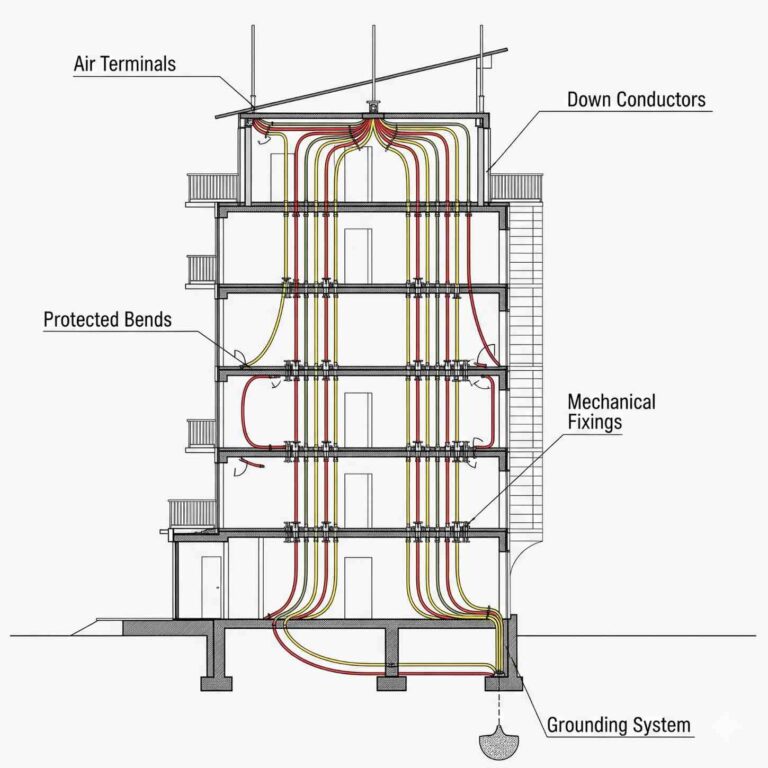
The installation of a lightning conductor involves several key components, including the air terminal, down conductor, and grounding system. The air terminal is the highest point of the lightning conductor, and it is designed to attract lightning strikes. The down conductor carries the electrical discharge from the air terminal to the grounding system, which disperses the energy into the earth.
- Step 1: Air Terminal Installation
The air terminal is installed at the highest point of the building, typically on the roof or a tall structure. This is the point where the lightning strike will be attracted.
- Step 2: Down Conductor Installation
The down conductor is installed from the air terminal to the grounding system, providing a path for the electrical discharge to follow.
- Step 3: Grounding System Installation
The grounding system is installed to disperse the electrical discharge into the earth. This is typically done using a network of underground cables and rods.
Types Of Lightning Conductors
There are several types of lightning conductors available, each with its own unique characteristics and advantages. The most common types include traditional rod-type conductors, tape conductors, and mesh conductors. Traditional rod-type conductors are the most common type and are typically installed on buildings with a flat roof.
Tape conductors, on the other hand, are used on buildings with a pitched roof and are designed to be more aesthetically pleasing. Mesh conductors are used on large buildings and provide a high level of protection against lightning strikes.
Traditional Rod-Type Conductor
This type of conductor is the most common and is typically installed on buildings with a flat roof. It provides a high level of protection against lightning strikes.
Recommended for: Buildings with flat roofs
Tape Conductor
This type of conductor is used on buildings with a pitched roof and is designed to be more aesthetically pleasing. It provides a high level of protection against lightning strikes.
Recommended for: Buildings with pitched roofs
Mesh Conductor
This type of conductor is used on large buildings and provides a high level of protection against lightning strikes. It is designed to be more effective than traditional rod-type conductors.
Recommended for: Large buildings
Frequently Asked Questions
Maintenance And Inspection
Regular maintenance and inspection of a lightning conductor are crucial to ensure it remains effective and safe. This includes checking the conductor for damage, corrosion, and wear, as well as ensuring the grounding system is functioning correctly.
Annual Inspection
Inspect the lightning conductor and grounding system annually to ensure they remain in good condition and are functioning correctly.
Regular Cleaning
Clean the lightning conductor and grounding system regularly to prevent corrosion and damage.
Damage Repair
Repair any damage to the lightning conductor or grounding system immediately to prevent safety risks and ensure the system remains effective.
Protect Your Property From Lightning Damage
Contact ZOD today for a free site visit and lightning protection assessment.