The Critical Role of the Earthing System in Modern Electrical Engineering
Why the Silent Connection to the Earth Is the Backbone of Electrical Safety, Reliability, and Functionality
In the intricate world of electrical engineering and power distribution, few concepts are as universally vital yet frequently misunderstood as the earthing system. In fact, earthing is the backbone of electrical safety, reliability, and functionality. While the visible components of electricity, lights, motors, and screens draw our attention, it is the silent, invisible connection to the earth that ensures these devices operate without posing catastrophic risks to human life or property.
This comprehensive guide explores the multifaceted importance of earthing, and the regulatory standards that mandate its use.
What is an Earthing System?
At its core, an earthing system is an arrangement of connections and conductors that link the non-current-carrying metal parts of electrical equipment to the general mass of the earth. The Earth acts as a universal reference point with zero potential.
The primary objective is to ensure that, in the event of an insulation failure or accidental short circuit, the dangerous electrical current is immediately directed into the ground rather than lingering on the surface of the equipment. By maintaining the potential of these metallic parts at or near zero volts, the system prevents the development of hazardous voltage differences that could lead to electric shock.
The Primary Pillar: Protecting Human Life from Electric Shock
The single most compelling answer to “Why is earthing important?” is the preservation of human life. The earthing system serves as the primary defense against electrocution.
Understanding Touch Potential and Step Potential
When an electrical fault occurs, such as a live wire coming loose and touching the metal casing of a washing machine, that casing becomes “live.” Without earthing, anyone touching that machine would complete the circuit to the ground, allowing current to flow through their body. This is known as “touch potential.”
A robust earthing system provides a low-resistance path for this leakage current. Because the copper earthing wire offers significantly less resistance than the human body, the vast majority of the current flows harmlessly into the earth. Furthermore, by allowing a high current to flow briefly, the earthing path triggers protective devices to trip, cutting off the power supply almost instantly.
How the Earthing System Responds to a Fault
For modern electrical protection devices to function correctly, the earthing system is non-negotiable. It is not enough for a fault to occur; the electrical system must recognize the fault and react to it.
According to electrical standards, the earth fault loop impedance must be sufficiently low to allow enough current to flow to trip the circuit breaker. If the earthing system has high resistance, the fault current might be too low to blow the fuse but high enough to start a fire or kill a person. A well-maintained system ensures the breaker trips in milliseconds.
How the Earthing System Responds to a Fault
Voltage Stabilization and Protection Against Overvoltage
Beyond immediate safety, the earthing system plays a pivotal role in the operational stability of the electrical network.
The Earth as a Reference Point
In a three-phase power system, the neutral point is often connected to the earth. This connection fixes the potential of the circuit conductors with respect to the earth. Without this reference, the voltage of the system could “float,” leading to unpredictable and dangerously high voltages relative to the ground. This stabilization is crucial for the longevity of insulation on cables and equipment.
Managing Lightning and Switching Surges
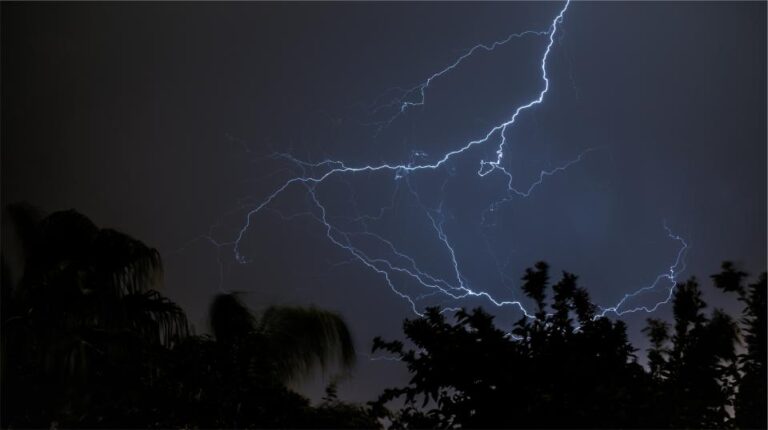
External factors pose significant threats to electrical infrastructure. Lightning strikes can inject millions of volts into a system in a fraction of a second. Without a designated path to dissipate this massive energy, the surge would traverse through building wiring, destroying appliances, frying circuitry, and potentially causing structural fires.
A dedicated earthing system, often integrated with lightning arresters and surge protection devices (SPDs), provides a direct, low-impedance highway for lightning energy to disperse into the earth mass safely. Similarly, it manages switching surges, spikes in voltage caused by the turning on and off of heavy industrial machinery.
Preventing Fire Hazards
Electrical fires are a leading cause of property damage globally. Many of these fires stem from “resistive heating” caused by leakage currents that are not high enough to trip a standard breaker but are persistent enough to generate heat.
Arcing faults are particularly dangerous. If a system lacks proper earthing, an arc can form between a live conductor and a metal surface. This arc generates intense heat (plasma), capable of igniting surrounding dust, insulation, or wood. A solid earthing system prevents the potential buildup required to sustain these arcs and facilitates the operations.
Components of an Effective Earthing System
To fully appreciate the system, one must understand the sum of its parts. An effective earthing system is an engineered assembly of specific components designed to interface with the soil physics.
Earth Electrode
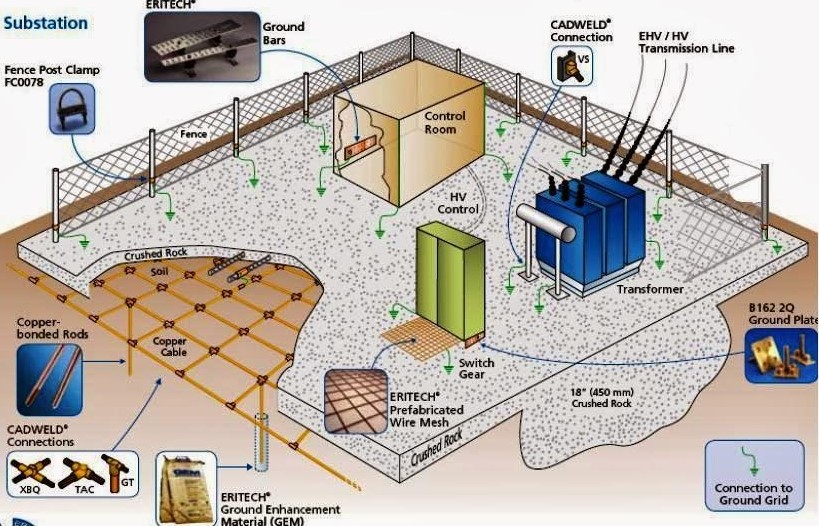
A metal rod, plate, or mat buried deep underground to make physical contact with the earth. Copper-bonded steel rods are the industry standard due to their conductivity and corrosion resistance.
Foundation ComponentMain Earthing Terminal (MET)
The central hub in the distribution board where all protective conductors meet.
Central HubEarthing Conductor
The heavy-gauge wire connecting the MET to the earth electrode.
Main LinkProtective Conductors (PE)
The wires running through the building connect every socket and appliance to the MET.
Equipment ProtectionEquipotential Bonding Conductors
Wires connecting extraneous conductive parts to the main earth to ensure everything is at the same potential.
Bonding NetworkThe Cost of Negligence: Data and Standards
The importance of earthing is not merely theoretical; it is backed by rigorous data and engineering standards. According to the Institute of Electrical and Electronics Engineers (IEEE) standard 80, the design of safety grounding in AC substations is critical to limit potential gradients.
Industry insights suggest that most of the power quality issues in industrial settings are directly traceable to poor earthing practices. Furthermore, insurance claims data frequently indicate that damage from lightning and surges is exponentially higher in facilities with degraded earthing systems.
Maintenance: The Forgotten Factor
An earthing system is not a “install and forget” component. Soil conditions change; moisture levels fluctuate with seasons, and metal corrodes over time. Consequently, the effectiveness of the earth connection can degrade.
Regular testing using the “Fall of Potential” method or clamp-on earth testers is vital. A system that tested perfectly five years ago may now be functionally useless due to a drought or the corrosion of a connection clamp. Routine maintenance ensures that the low-resistance path remains intact, ready to divert fault currents the moment they occur.
A Quick Earthing System Audit
Whether it’s a commercial building or an industrial facility, walk through and check these things:
- Is an Earth Electrode properly installed and buried to the required depth?
- Is the Main Earthing Terminal (MET) accessible, clearly labeled, and in good physical condition with all connections tight?
- Are all Protective Conductors — wires, intact and connected at every socket and fixed appliance?
- Is Equipotential Bonding in place for all extraneous metallic services; water pipes, gas pipes, structural steelwork?
- Has the Earth Resistance been measured recently?
- Is the earthing system integrated with any Lightning Protection System and Surge Protection Devices (SPDs) on site?